




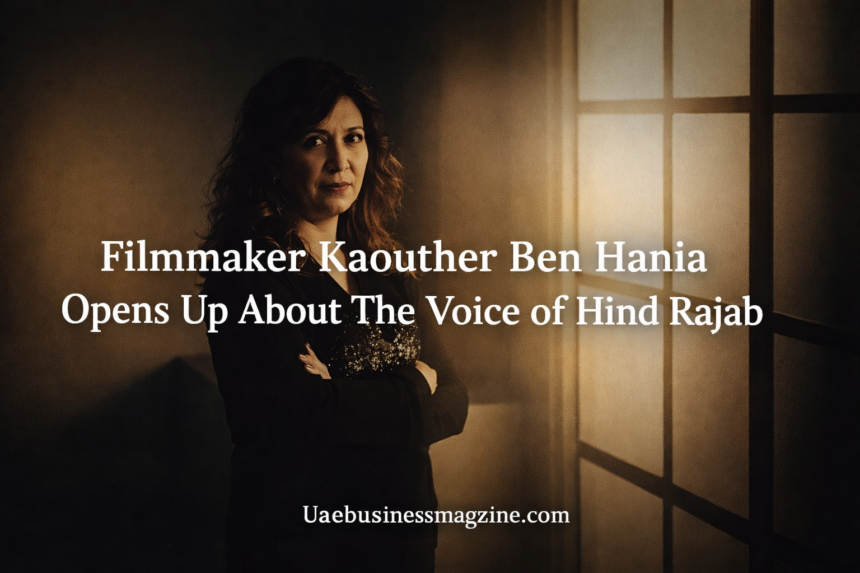
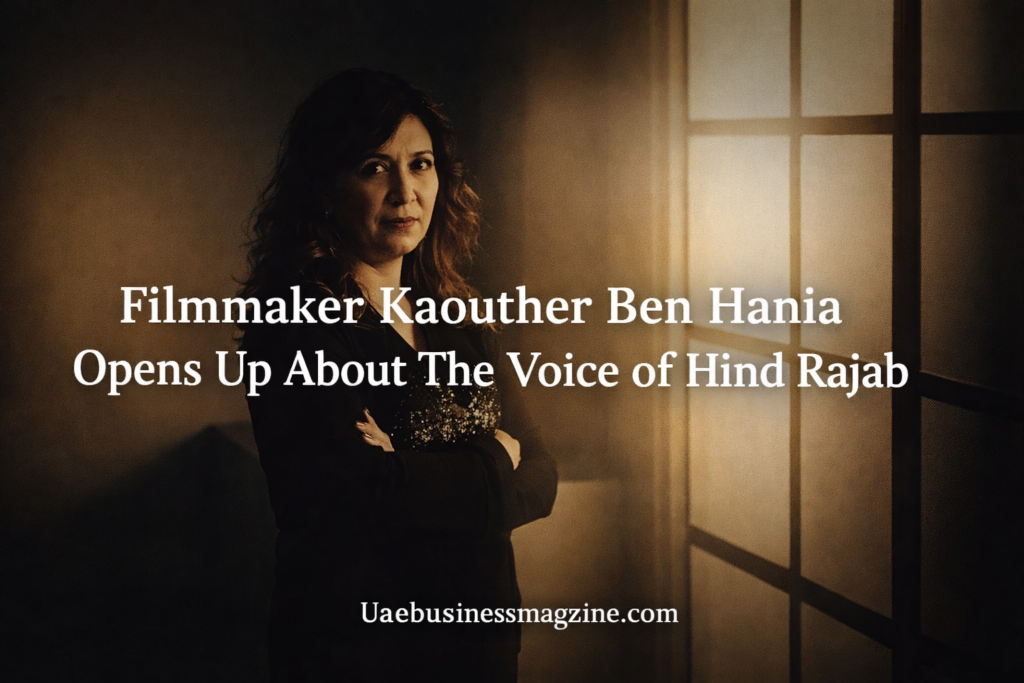
Kaouther Ben Hania created one of 2025’s most powerful films about a tragic true story from Gaza. The Voice of Hind Rajab tells the heartbreaking tale of a five-year-old girl trapped in a car, calling for help that never came. The film earned an Oscar nomination in 2026.
The True Story Behind The Voice of Hind Rajab
The Voice of Hind Rajab is based on a real event that shocked the world. Here’s what happened:
The tragic story:
Hind Rajab: A five-year-old Palestinian girl from Gaza
The situation: Trapped inside a car with family members who had been shot and killed
Her desperate call: She phoned the Palestinian Red Crescent (similar to Red Cross) in Ramallah asking for help
The rescue workers: Tried to calm her down and promised to save her
The heartbreaking reality: Rescue workers knew saving her would be extremely difficult
The outcome: Despite promises of help, Hind Rajab did not survive
This real phone call recording became the foundation for Kaouther Ben Hania’s powerful documentary film.
Who Is Filmmaker Kaouther Ben Hania?
Kaouther Ben Hania is a talented filmmaker from Tunisia, a country in North Africa.
About Kaouther Ben Hania:
Nationality: Tunisian
Profession: Film director and storyteller
Background: Grew up in a town without any movie theaters
Passion: Telling important stories from the Arab world
Previous work: Made films about Syria and other Middle Eastern countries
Recognition: Her films have been nominated for prestigious awards including the Oscars
Philosophy: Believes cinema should give voice to people who can’t be heard
Personality: Describes herself as “an angry person” who uses that anger to create meaningful art
Despite growing up without access to movies, Kaouther Ben Hania became one of the most important filmmakers telling stories from the Middle East.
How Kaouther Ben Hania First Heard Hind Rajab’s Voice
Kaouther Ben Hania shared the powerful moment when she first encountered Hind Rajab’s story.
She explained:
“When I heard Hind Rajab’s voice for the first time, I thought for a millisecond she was asking me to help her. I felt a sense of helplessness, and since I hate being helpless, I asked myself what I could do.”
What happened next:
Found the audio: Discovered Hind’s voice on social media
Felt helpless: Realized she couldn’t actually save the little girl
Decided to act: Asked herself what she COULD do as a filmmaker
Made a decision: Creating a film would honor Hind’s voice better than a social media post
Wanted lasting impact: Movies last forever; social media posts get scrolled past quickly
Kaouther Ben Hania realized that while she couldn’t save Hind Rajab’s life, she could make sure people never forget her story.
Why The Voice of Hind Rajab Film Was Made
Kaouther Ben Hania had clear reasons for making this difficult film.
Her motivations:
Honor Hind’s voice: Social media wasn’t the right place for such an important story
Refuse to stay silent: She didn’t want to be another person who just watched and did nothing
Make people care: When one person dies, it’s a tragedy; when thousands die, it becomes just a number
Use cinema’s power: Movies can give voices to thousands of people who suffered
Create lasting memory: Films stay in history; they don’t disappear like social media posts
Demand attention: Force people to actually listen instead of just scrolling past
She said: “I found her voice on social media where people are scrolling through the next imagery or video. It wasn’t the right space to honour her voice. I thought a movie would be a better option.”
How The Film Was Made: Telling the Story
Kaouther Ben Hania made important creative decisions about how to tell Hind Rajab’s story.
The filming approach:
Real audio recordings: Used actual phone conversations between Hind and rescue workers
Present tense storytelling: Made viewers feel like events were happening RIGHT NOW
Red Crescent perspective: Showed the story from the rescue workers’ point of view
Two spaces in the film:
- Sound space: Hind Rajab’s real voice on the phone
- Image space: What was happening at the Red Crescent office
Re-enactment: Actors played the rescue workers to show their reactions
Distance perspective: Showed how people far away experienced the tragedy
Why tell it from rescue workers’ view?
Kaouther Ben Hania explained her choice:
“I thought since I could not film Gaza, I needed to show what was happening from a distance. The Red Crescent perspective worked best because they were far, like most of us.”
The rescue workers represent all of us – people around the world who heard Hind’s cries for help but couldn’t do anything to save her.
The Power of Using Real Audio Recordings
Some people questioned whether Kaouther Ben Hania should use the real recordings of five-year-old Hind Rajab’s voice.
The controversy:
Critics’ concern: Using a real child’s desperate phone calls might be too disturbing
Uncomfortable listening: Hearing Hind’s actual voice is extremely difficult emotionally
Questions raised: Is it right to use such painful real recordings?
Kaouther Ben Hania’s response:
“I did not make this film to make people comfortable. I knew listening to the real voice would have been hard for the audience, but my purpose was not to protect them. I needed a confrontational film to showcase the horrors in Gaza.”
Why she used real audio:
Authenticity: The real voice is a genuine historical document
Impact: Real recordings are more powerful than actors’ voices
Truth telling: Shows exactly what happened without changing anything
Witnessing: Forces people to truly hear what this child experienced
No protection: Audiences need to face uncomfortable truths
The filmmaker wanted to make sure people couldn’t look away or pretend they didn’t know what happened.
Meeting Hind Rajab’s Mother
Before making the film, Kaouther Ben Hania needed permission from Hind’s family, especially her mother.
The first phone call:
Mother’s location: Still in Gaza during the conversation
Her situation: Hadn’t had time to properly mourn because of ongoing bombings
Moving constantly: Forced to relocate frequently due to danger
Her response: Said she wanted justice for her daughter
Her permission: Told Kaouther to make the film if it would help bring justice
Growing relationship: The filmmaker and Hind’s mother became close
Later meeting:
Mother’s initial reaction: Said watching the film was still too painful
Family screening: Asked her brother to watch it first and give feedback
Final meeting: After being evacuated from Gaza, she finally met Kaouther at the Doha Film Festival
Film’s premiere: Screened at the opening ceremony where they were together
This shows Kaouther Ben Hania deeply respected Hind’s family and wanted their blessing before telling their daughter’s story.
The Emotional Challenge of Making the Film
Creating The Voice of Hind Rajab took a serious emotional toll on everyone involved.
Kaouther Ben Hania described the experience:
“It was emotionally draining. But this movie gave us meaning about what we are doing as artistes.”
How the team coped:
Palestinian actors: All the actors were Palestinian, making it even more personal
Sense of purpose: Felt they were doing something important
Privilege awareness: Knew they were safe while making a film about people who weren’t
Couldn’t collapse: Had to stay strong so others could witness Hind’s story
Art in service: Put their talents to work for a meaningful cause
Stayed focused: Couldn’t let emotions stop them from completing the important work
Making this film meant living with Hind Rajab’s story every single day, but the team believed the world needed to hear it.
The Film About Helplessness
The Voice of Hind Rajab explores a difficult theme: what happens when you want to help but can’t?
Kaouther Ben Hania explained:
“This is a film about helplessness. Sometimes, feeling helpless pushes you to do something.”
Characters experiencing helplessness:
Omar and Rana: The two rescue workers in the film
Their breakdown: They cry because they can’t save Hind
On the frontline: First ones to experience the helplessness directly
Representing everyone: Stand for all of us who heard Gaza’s cries for help
The film’s question:
Does just watching and feeling bad make us part of the problem? The rescue workers show that even good people trying to help can end up feeling helpless and guilty.
This uncomfortable feeling is exactly what Kaouther Ben Hania wanted audiences to experience.
Cinema Akil Premiere and Audience Reactions
The Voice of Hind Rajab premiered at Cinema Akil in Dubai, creating space for important conversations.
About the premiere:
Venue: Cinema Akil (an independent cinema in Dubai)
Purpose: Made room for complex conversations about war
Audience experience: Confronted viewers with difficult truths
No looking away: The film doesn’t let people ignore what happened
Moral questions: Raised issues about psychological and moral devastation
Community impact: Brought people together to discuss Gaza
The screening wasn’t just about watching a movie – it was about creating dialogue and understanding about incredibly difficult topics.
The Oscar Nomination and What It Means
The Voice of Hind Rajab achieved significant recognition on the world stage.
Awards journey:
Tunisia’s official entry: Selected as Tunisia’s submission to the Oscars
15-film shortlist: Made it to the final 15 documentaries being considered
Oscar nomination 2026: Earned an official Academy Award nomination
Major achievement: Rare for Arabic-language films to get this recognition
What an Oscar win would mean:
Kaouther Ben Hania explained:
“What happens when you win an Oscar is that even those people who are not interested in an issue begin to sit back and take note. We need to win an Oscar so that people may hear the voice of Gaza.”
Impact of winning:
Global attention: People who don’t care about Gaza might start paying attention
Hind’s voice amplified: Her story would reach millions more people
Justice for victims: Gives voice to all the children suffering in war
Arabic cinema recognition: Shows important stories come from all parts of the world
Historical record: Ensures this tragedy isn’t forgotten
The Challenges of Being an Arabic Filmmaker
Kaouther Ben Hania discussed the difficulties of making films in Arabic instead of English.
Her experience:
English film offers: Received many proposals to make English-language movies
Immediate success: English films find audiences and distribution more easily
Her choice: Refused to make English films despite easier path
Double the fight: Arabic films require fighting twice as hard for recognition
Worth the struggle: She likes fighting when it’s for something meaningful
Why she tells Arabic stories:
“We need to tell stories of the Arab world. The cultures that don’t tell their stories find it difficult to exist because they don’t get to form narratives.”
Her philosophy:
Cultural existence: Countries need their own stories to maintain their identity
Not limited: She’s Tunisian but tells stories from across the Arab world
Previous films: Made movies about Syria, Palestine, and other countries
Cinema’s role: Not just entertainment but a tool for cultural survival
Giving voice: Helps people who are usually voiceless be heard
Growing Up Without Movie Theaters
Kaouther Ben Hania shared her unlikely journey to becoming a filmmaker.
Her background:
Hometown: A town in Tunisia with no movie theaters
No access: Couldn’t watch films growing up
Passion anyway: Still dreamed of making movies
Self-expression: Filmmaking became her way to express herself
Loves her job: Despite challenges, she truly enjoys being a director
From no theaters to the Oscars:
This incredible journey shows that you don’t need perfect conditions to achieve your dreams. Kaouther Ben Hania went from a place with zero movie theaters to creating films nominated for the world’s most prestigious film awards!
Why Kaouther Ben Hania Makes Films
Kaouther Ben Hania explained what drives her to create movies.
Her motivations:
“I do things out of passion—and anger. I am an angry person. I wanted to become a filmmaker because it allowed me to express myself.”
What fuels her work:
Passion: Deep love for storytelling and cinema
Anger: Uses her anger about injustice to create powerful films
Self-expression: Movies let her say what needs to be said
Love for the job: Genuinely enjoys the work despite difficulties
Purpose beyond entertainment: Cinema can be a tool, not just fun
Voice for voiceless: Helps people who can’t tell their own stories
Worth fighting for: Willing to struggle if the story matters
Her approach:
She doesn’t make films to become rich or famous. She makes films because she sees injustice in the world and refuses to stay silent about it.
The Film’s Distribution Challenges
Getting The Voice of Hind Rajab shown in theaters faced significant obstacles.
Distribution difficulties:
US distribution: Very complicated to show the film in American theaters
No big budget: Doesn’t have the money that major Hollywood films have
Limited tools: Can’t compete with big studio marketing campaigns
Oscar disadvantage: Makes winning against well-funded films harder
But she keeps fighting:
Kaouther Ben Hania doesn’t let these challenges stop her from trying to share Hind Rajab’s story with as many people as possible.
What Makes This Film Different
The Voice of Hind Rajab stands out from other documentary films in important ways.
Unique elements:
Real audio recordings: Uses actual phone calls, not re-created dialogue
Child’s perspective: Centers on a five-year-old’s experience
Present tense: Makes you feel like events are happening now
Confrontational approach: Doesn’t let viewers look away
Emotional honesty: Shows rescue workers’ breakdowns and helplessness
Purpose-driven: Made to demand justice, not just to inform
Gaza focus: Tells one specific story to represent thousands
Bearing witness: Forces audiences to truly see and hear what happened
This isn’t a comfortable documentary that lets you feel good about caring. It’s designed to make you uncomfortable and keep you thinking long after the film ends.
The Importance of Telling One Story
Kaouther Ben Hania explained why focusing on one child’s story matters.
She referenced an important saying:
“They say when one person dies, it’s a tragedy; but when thousands die, it is a statistic.”
Why one story matters:
Statistics feel distant: Numbers like “thousands killed” don’t feel real
Personal connection: One child’s voice makes it real and human
Can’t ignore: Harder to forget one specific person than large numbers
Represents many: Hind’s story stands for all the children who suffered
Emotional impact: Connecting with one person creates deeper understanding
Memorable: We remember individuals better than statistics
By telling Hind Rajab’s specific story, the filmmaker makes the larger tragedy of Gaza impossible to ignore or forget.
Social Media and Desensitization
Kaouther Ben Hania addressed whether social media makes people care less about suffering.
The social media question:
Constant images: People see tragic photos and videos all day on social media
Quick scrolling: Move from one horrible image to the next in seconds
Does it make us numb? Do we stop feeling when we see so much suffering?
Kaouther’s response:
“I don’t think we have become desensitised necessarily because of social media. Young people had not become desensitised; they led movements around what happened in Gaza.”
Her observations:
Young people care: Led protests and movements about Gaza
Not everyone understands: Some people couldn’t grasp the scale of what was happening
Cinema’s role: Movies can help people understand better than social media posts
Lasting impact: Films stay with you longer than something you scroll past
Collective memory: Cinema creates shared understanding across communities
The Question of Genocide
Kaouther Ben Hania didn’t shy away from using the word “genocide” to describe what happened in Gaza.
Her difficult question:
“The question I asked myself was—how do we talk about the genocide? And how does one make a movie on it that will remain etched till posterity?”
What “genocide” means:
Simple definition: The deliberate killing of a large number of people from a particular group
Historical examples: Holocaust, Rwanda, Cambodia
Gaza situation: Many people, including Kaouther, believe what happened in Gaza fits this definition
Filmmaker’s challenge: How do you make a film about something this horrible that people will remember forever?
Her answer: Tell one specific, true story with a real child’s voice that can’t be forgotten.
Hind Rajab Became a Symbol
Kaouther Ben Hania noted something heartbreaking about Hind Rajab.
She said:
“Hind Rajab did not want to become a symbol of what was happening in Gaza. And yet, she became one.”
What this means:
Just wanted to live: Hind was just a little girl who wanted to be saved
Didn’t choose symbolism: She didn’t ask to represent all Gaza’s children
Became important anyway: Her story came to represent the larger tragedy
Unfair burden: A five-year-old shouldn’t have to carry this weight
Necessary symbol: Her voice helps people understand what happened to thousands
This reminds us that Hind Rajab was a real child with her own life and dreams, not just a symbol or statistic.
The Film’s Core Message
The Voice of Hind Rajab delivers a clear, powerful message to everyone who watches it.
The central message:
Witness what happened: Don’t look away from difficult truths
Hear the voiceless: Listen to people who are suffering
Remember specific victims: Don’t let them become just numbers
Feel uncomfortable: That discomfort should push you to action
Demand justice: Watching isn’t enough; we need to demand change
Never forget: Keep these stories alive so they don’t happen again
Break the silence: Speak up instead of staying quiet
Kaouther Ben Hania wants this film to do more than inform – she wants it to create change.
Conclusion: Why This Film Matters
Kaouther Ben Hania’s film The Voice of Hind Rajab tells the heartbreaking true story of a five-year-old Palestinian girl who called for help that never came. By using real audio recordings and showing the helplessness of rescue workers who couldn’t save her, the film forces us to witness tragedy we might prefer to ignore.
Key takeaways:
- True story: Based on real events in Gaza
- Real voice: Uses actual phone recordings of five-year-old Hind Rajab
- Tunisian filmmaker: Kaouther Ben Hania directed this powerful documentary
- Oscar nomination: Recognized as one of 2025’s most important films
- Uncomfortable truth: Designed to make viewers feel helpless and then act
- One story for thousands: Hind represents all children suffering in war
- Cinema’s power: Movies can give voice to the voiceless
- Demand for justice: Made to ensure victims aren’t forgotten
Kaouther Ben Hania turned her feeling of helplessness into action by creating a film that ensures Hind Rajab’s voice will never be silenced. The Oscar nomination gives this important story an even bigger platform to reach people around the world.
Whether the film wins the Oscar or not, it has already succeeded in making sure we hear the voice of Gaza through one little girl’s desperate phone call for help.
Important message: This film shows us that when we see suffering, we have a choice – stay silent and helpless, or use whatever skills we have to speak up and demand justice. Kaouther Ben Hania chose to use filmmaking. What will you choose?
Reference By : khaleejtimes.com
Read More : Uaebusinessmagazine.com

