






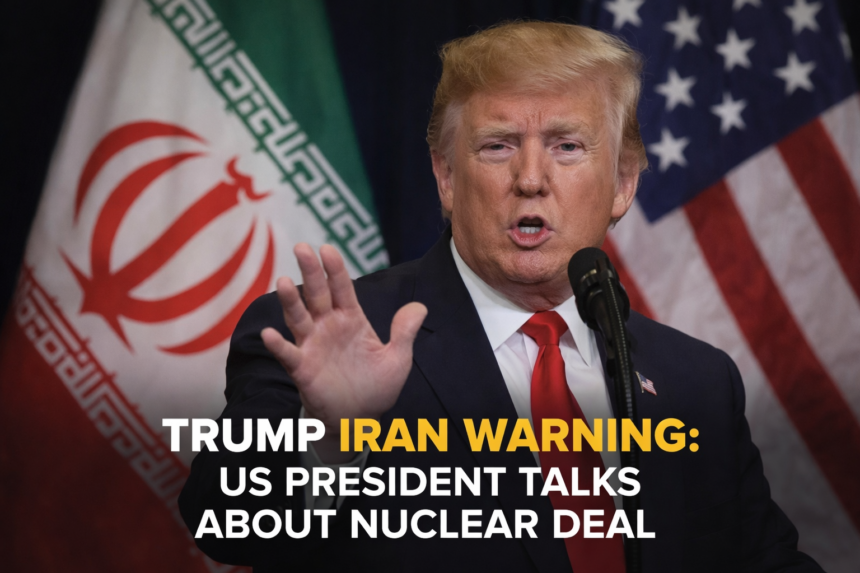
Discover the Trump Iran warning about nuclear weapons. Learn about US-Iran tensions and military exercises in simple
What Is the Trump Iran Warning About?
On Wednesday, January 28, 2026, US President Donald Trump gave a strong Trump Iran warning to the country of Iran. He said that “time is running out” for Iran to make an agreement about nuclear weapons.
President Trump wants Iran to stop trying to make nuclear weapons. He warned that if Iran doesn’t agree to a deal, there could be military action (which means fighting).
Simple Explanation
Think of it like this: Imagine two classmates having a disagreement. One says, “We need to talk and solve this problem peacefully, or there will be consequences.” That’s similar to what’s happening between the US and Iran, but on a much bigger scale involving countries.
The Main Message
The Trump Iran warning has three main points:
- Iran should come to the negotiating table (agree to talk)
- Iran must promise NOT to make nuclear weapons
- If Iran doesn’t agree, the situation could get worse
Understanding US-Iran Relations Simply
To understand the Trump Iran warning, we need to know some background about US Iran tensions.
What Are US-Iran Relations?
The United States and Iran are two countries that have not been friendly with each other for many years. They disagree on many important issues.
Key Disagreements:
- Nuclear weapons programs
- Iran’s influence in the Middle East
- Human rights issues
- Regional conflicts
A Brief History (Simple Version)
Long Ago: The US and Iran used to be friends, but that changed in 1979 (over 45 years ago).
Middle Years: The countries stopped talking to each other for many years.
Recent Times: Sometimes they try to make agreements, but it’s difficult because there’s a lot of mistrust.
Now: President Trump is trying to get Iran to agree to rules about nuclear weapons.
What Is a Nuclear Deal?
Many students ask: “What exactly is a nuclear deal?” Let’s understand this simply.
Understanding Nuclear Weapons
Nuclear Weapons: These are extremely powerful bombs that can cause massive destruction. They are thousands of times more powerful than regular bombs.
Why Countries Want Them: Some countries think having nuclear weapons makes them more powerful and safer.
Why Others Worry: Many countries worry that if too many nations have nuclear weapons, the world becomes more dangerous.
What a Nuclear Deal Includes
An Iran nuclear deal would include promises like:
- Iran Promises:
- Not to make nuclear weapons
- To let inspectors check their facilities
- To limit certain nuclear activities
- Other Countries Promise:
- To remove economic sanctions (punishments)
- To allow normal trade
- To treat Iran more fairly
Previous Deals
There was a nuclear deal in 2015 called the “JCPOA” (Joint Comprehensive Plan of Action). However, the US left that deal in 2018, and things became complicated again.
Trump’s Message to Iran
Let’s look at exactly what President Trump said in his Trump Iran warning.
The Main Statement
President Trump wrote on social media:
“Hopefully Iran will quickly ‘Come to the Table’ and negotiate a fair and equitable deal — NO NUCLEAR WEAPONS — one that is good for all parties. Time is running out.”
Breaking This Down:
- “Come to the Table” = Start talking and negotiating
- “Fair and equitable” = Good for everyone involved
- “NO NUCLEAR WEAPONS” = The most important rule
- “Time is running out” = The offer won’t last forever
The Warning
Trump also mentioned something called “Operation Midnight Hammer” – a previous US military operation against Iran. He warned that any future action would be “far worse.”
What This Means: He’s saying that if talking doesn’t work, military action could happen, and it would be very serious.
The “Massive Armada”
Trump said “a massive armada is heading to Iran.”
What’s an Armada? An armada is a large group of military ships and aircraft. In this case, it means the US is sending many warships, fighter jets, and military equipment to the Middle East region near Iran.
US Military Moves in the Middle East
The Trump Iran warning comes with actual US military exercises and movements. Let’s understand what’s happening.
The USS Abraham Lincoln
What It Is: The USS Abraham Lincoln is a nuclear-powered aircraft carrier – a huge warship that carries fighter jets.
Its Size: This massive ship carries:
- Dozens of fighter jets
- Nearly 5,000 sailors
- Guided missile destroyers
- Advanced military technology
Where It Is: The carrier has arrived in Middle Eastern waters, though the exact location is kept secret for security reasons.
Fighter Jets Deployed
US Jets: F-15E Strike Eagle fighter jets have been moved to the region. These are advanced military aircraft.
UK Jets: The United Kingdom has also sent Typhoon fighter jets to help.
Purpose: Officials say these are for “defensive posture” – meaning to protect and be ready.
Military Exercises
The US Central Command (CENTCOM) announced multi-day military readiness exercises across the Middle East.
What Are Military Exercises? Think of them like practice drills. The military practices:
- How to deploy quickly (get to places fast)
- How to work together
- How to be ready for any situation
Key Points About the Exercises:
- Multiple countries are participating
- Air forces are practicing rapid deployment
- Training happens with partner nations
- Focus is on being “combat-ready”
Lieutenant General Derek France, a top US Air Force commander, said the exercises show that US forces can operate “under demanding conditions — safely, precisely and alongside our partners.”
What Iran Is Saying
While Trump is giving warnings, Iran is also responding. Let’s understand Iran’s position.
Iran’s Foreign Minister Response
Abbas Araghchi, Iran’s Foreign Minister, gave a televised response to the Trump Iran warning.
His Main Points: “Conducting diplomacy through military threat cannot be effective or useful. If they want negotiations to take shape, they must set aside threats, excessive demands and illogical issues.”
What This Means: Iran is saying they won’t negotiate if the US is threatening military action at the same time. They want:
- No military threats
- Reasonable demands
- Respect during negotiations
Iran’s Position
Iran’s government has said:
- They’re willing to talk, but not under pressure
- Any attack will be met with force
- They don’t respond well to threats
- Negotiations should be respectful
Why This Matters
You might wonder: “Why should I care about the Trump Iran warning?” Here’s why international diplomacy affects everyone.
Reason 1: Peace in the Middle East
The Middle East is a region with many countries. What happens between the US and Iran affects:
- Regional stability
- Other countries in the area
- Oil prices worldwide
- International relations
Reason 2: Nuclear Weapons Concerns
Nuclear weapons are incredibly dangerous. The world is safer when:
- Fewer countries have them
- Countries agree on rules
- International inspectors can check facilities
- Diplomatic solutions are found
Reason 3: Economic Impact
US Iran tensions can affect:
- Oil prices (Iran has lots of oil)
- Trade routes in the region
- Economic stability
- Jobs and businesses worldwide
Reason 4: Learning About Diplomacy
Understanding the Iran nuclear deal teaches us:
- How countries solve problems
- The importance of communication
- How military and diplomacy work together
- International cooperation
Understanding Diplomacy and Military Action
Let’s learn about two important ways countries deal with disagreements.
What Is Diplomacy?
Diplomacy means solving problems by talking, negotiating, and making agreements.
Diplomatic Solutions Include:
- Meetings between leaders
- Written agreements and treaties
- International organizations helping
- Compromise where both sides give something
Benefits of Diplomacy:
- Peaceful solutions
- No one gets hurt
- Long-term relationships can improve
- Economic benefits
What Is Military Action?
Military Action means using armed forces to achieve goals.
Types Include:
- Showing military strength (like moving ships)
- Military exercises (practice and preparation)
- Actual military operations (fighting)
Why Countries Use It:
- To show they’re serious
- To protect themselves
- To pressure other countries
- As a last resort when talking fails
The Balance
The Trump Iran warning shows both approaches:
- Diplomacy: Asking Iran to “come to the table” and negotiate
- Military: Moving ships and jets to show strength
President Trump is trying to use both at the same time – offering talks while showing military power.
What Experts Are Saying
Military analysts and international relations experts have different views on the US Iran tensions.
Some Experts Say
Cautious Approach Needed: Many experts believe that mixing military threats with diplomatic offers is risky. They worry it might make Iran less willing to negotiate.
Exercises as Pressure: Military analysts told CNN that sometimes military exercises serve multiple purposes:
- Actual training and readiness
- Pressure tactics to force negotiations
- Cover for potential future operations
Historical Context
Experts point out that similar situations in the past have led to:
- Successful negotiations when both sides compromise
- Increased tensions when threats escalate
- Better outcomes when diplomacy is given priority
The Middle Ground
Some analysts believe the best approach combines:
- Clear communication about expectations
- Willingness to negotiate genuinely
- Military readiness without threatening
- Respect for both sides’ concerns
What This Means for Peace
The Trump Iran warning raises important questions about peace in the Middle East region.
Hope for Peaceful Solution
Positive Signs:
- Both sides have mentioned willingness to talk
- International partners want peaceful resolution
- Economic benefits for everyone if deal succeeds
- Previous agreements show it’s possible
What Needs to Happen:
- Both sides agree to sit down and talk
- Reasonable demands from all parties
- Trust-building measures
- International support for the process
Concerns About Escalation
Worries Include:
- Military buildup could lead to accidents
- Misunderstandings could cause conflicts
- Time pressure might prevent good negotiation
- Regional tensions affecting the process
The Role of Other Countries
Many other countries are involved:
- European nations: Want peaceful resolution
- Middle East countries: Affected by any conflict
- China and Russia: Have relationships with Iran
- United Nations: Promotes international law
Important Terms Explained for Students
Let’s make sure you understand all the important words from this Trump Iran warning story.
Armada: A large group of military ships and aircraft
Diplomacy: Solving problems between countries by talking and negotiating
Nuclear Weapons: Extremely powerful bombs using atomic energy
Sanctions: Economic punishments that limit trade and business
Military Exercise: Practice drills where armed forces train together
Negotiation: Discussion between parties to reach an agreement
Aircraft Carrier: A huge warship that carries fighter jets
CENTCOM: US Central Command – military organization for Middle East region
Escalation: When a situation gets more serious or dangerous
Deploy: To move military forces to a location
What Students Can Learn
This situation teaches important lessons:
Lesson 1: Communication Matters
Countries, like people, need to talk to solve problems. The Trump Iran warning shows that communication (even difficult communication) is important.
Lesson 2: Consequences Are Real
Actions have consequences. Both the US and Iran know their choices affect millions of people.
Lesson 3: Peaceful Solutions Are Better
While military power exists, finding peaceful solutions through the Iran nuclear deal is always better for everyone.
Lesson 4: The World Is Connected
What happens between the US and Iran affects oil prices, trade, and peace worldwide. We’re all connected.
Lesson 5: Understanding Different Perspectives
Both sides have their reasons and concerns. Understanding different viewpoints helps us see the full picture.
Final Thoughts
The Trump Iran warning represents a critical moment in international relations. President Trump is trying to get Iran to agree to a nuclear deal by using both diplomatic offers and military pressure.
The Main Questions:
- Will Iran agree to negotiate?
- Will the US reduce military threats?
- Can both sides find common ground?
- Will peace prevail over conflict?
What Happens Next: The coming days and weeks will show whether:
- Negotiations begin
- Military tensions decrease
- A new Iran nuclear deal becomes possible
- Peace can be maintained in the region
For Young People: Understanding international relations like US Iran tensions helps you become informed global citizens. These are complex issues, but learning about them prepares you to understand and contribute to a more peaceful world.
Hope for the Future: Despite current tensions, history shows that countries can overcome differences through:
- Honest communication
- Mutual respect
- Willingness to compromise
- International cooperation
The goal is always peace, stability, and a safer world for everyone.
Reference By : Gulfnews.com
Read More : Uae business magazine

